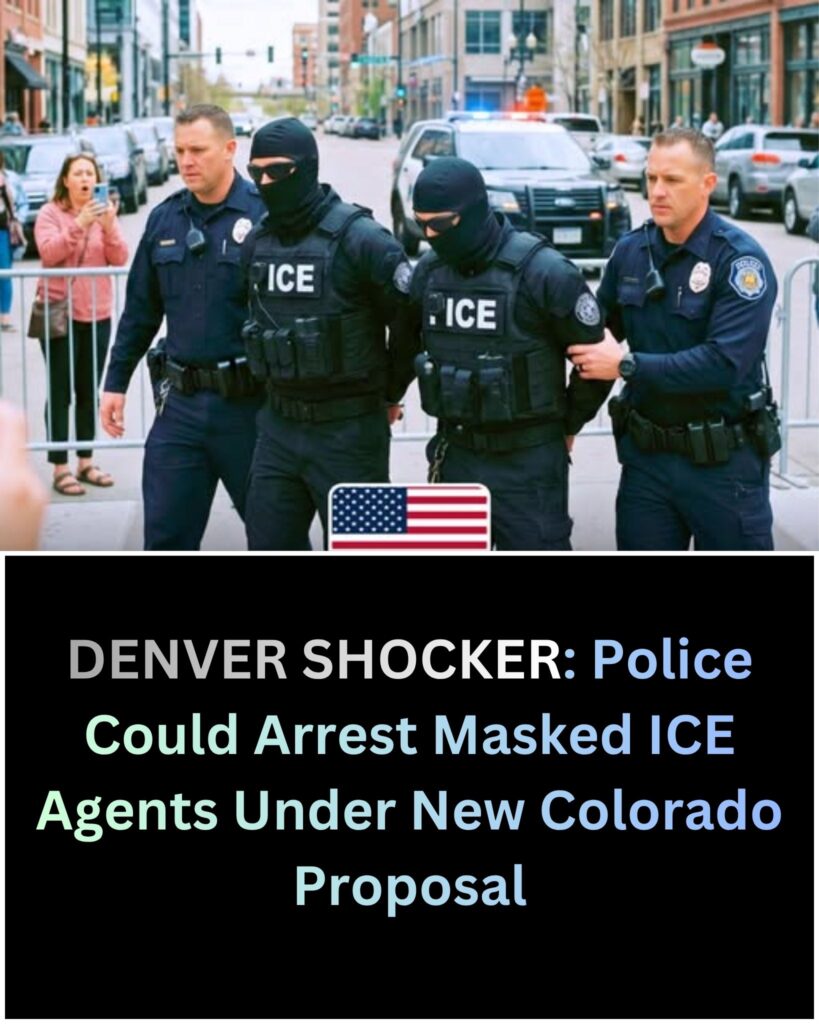
A major legal battle is taking shape in Colorado after Denver leaders approved a measure aimed at stopping law enforcement officers, including federal immigration agents, from hiding their faces during arrests and detentions. The ordinance has quickly become a national flashpoint because it sits at the center of two highly sensitive issues: public accountability in policing and the power of local governments to regulate federal officers.
Denver’s City Council unanimously approved the ban in March 2026. The measure applies to local, state, and federal law enforcement officers operating inside the city and requires visible identification during arrests or detentions. It also says officers cannot wear face coverings in those situations, except in limited circumstances such as undercover work, SWAT activity, tactical responses, or emergencies. Under the ordinance, officers who violate the rule could face citations and, in some cases, arrest by Denver police. (Denver 7 Colorado News (KMGH))
Why Denver Passed the Rule
Supporters of the ordinance say the measure is about a basic principle: people should know who is detaining them. In recent immigration enforcement operations across the country, residents have raised concerns about masked agents appearing in public spaces, making arrests, and refusing to clearly identify themselves.
For many Denver residents and local officials, that creates a serious trust problem. When armed officers conceal their faces and do not display clear identification, witnesses may not know whether they are seeing a lawful arrest, an impersonation, or an abuse of authority. Supporters argue that visible identification protects the public, protects legitimate officers, and gives communities a clear way to hold government actors accountable.
The ordinance also reflects a broader push in several cities to create local rules around immigration enforcement tactics. Los Angeles County officials, for example, moved toward a similar proposal after concerns over masked agents during immigration raids in Southern California. That effort also focused on visible identification and limits on concealed identities during enforcement actions. (AP News)
The ICE Masking Debate
The controversy is not only about Denver. It is part of a wider national debate over whether immigration officers should be allowed to cover their faces during arrests.
Supporters of masking say ICE agents and other federal officers face real safety risks. They argue that officers can become targets of harassment, doxxing, threats, or retaliation after high-profile immigration operations. The Department of Homeland Security has strongly criticized Denver’s proposal, calling it dangerous for federal law enforcement and arguing that face coverings can protect officers and their families. (Axios)
But critics of masked enforcement say safety concerns cannot erase the need for accountability. They argue that officers already have tools to protect themselves in truly dangerous situations, including tactical exemptions, undercover exceptions, and emergency response rules. In their view, routine immigration arrests should not look like anonymous raids.
That tension is why Denver’s ordinance has drawn so much attention. It does not simply ban all face coverings in every situation. It tries to draw a line between legitimate safety exceptions and everyday enforcement where public identification is expected.
The Legal Fight Ahead
The biggest question is whether Denver can enforce this rule against federal immigration officers.
Local governments generally have authority to regulate conduct within city limits, especially when it comes to public safety. But federal officers operate under federal authority. If Denver police tried to cite or arrest an ICE agent during an immigration operation, the dispute could quickly become a constitutional fight over federal supremacy.
Legal experts have noted that courts may have to decide whether local rules like Denver’s interfere with federal law enforcement duties. If a judge finds that the ordinance obstructs federal immigration enforcement, parts of the law could be blocked. If the court finds that the rule is a neutral public safety measure that applies to all officers, Denver may have a stronger argument.
That distinction matters. A law written only to target ICE could face a tougher legal path. A broader rule requiring all law enforcement officers to identify themselves may be easier to defend, especially if it includes reasonable exceptions for safety and undercover operations.
Why Public Trust Matters
At the heart of the issue is public confidence. Law enforcement depends not only on legal power but also on public legitimacy. When residents see unidentified armed officers making arrests, fear can spread quickly. In immigrant communities, that fear is often even stronger because families may already be anxious about detention, deportation, or separation.
Denver leaders say the ordinance is meant to prevent confusion and fear. They argue that anyone with the power to detain another person should be visible, identifiable, and accountable.
Opponents see it differently. They believe the policy could put federal officers in danger and create direct conflict between Denver police and federal agencies. They also warn that the rule may become symbolic politics rather than practical governance if it cannot survive a legal challenge.
A National Test Case
Denver’s move is now being watched far beyond Colorado. Other cities are considering similar rules, and federal officials are pushing back hard. The outcome could shape how local governments respond to immigration enforcement tactics in the years ahead.
The case raises a simple but powerful question: should officers carrying out public arrests be allowed to remain anonymous?
For Denver officials, the answer is no, except in rare and clearly justified circumstances. For federal immigration authorities, the answer is more complicated, especially when officer safety is involved.
What happens next could determine whether cities can demand more transparency from federal officers operating on their streets, or whether federal authority will override those local rules. Either way, Denver has placed itself at the center of one of the most important law enforcement accountability debates in America.