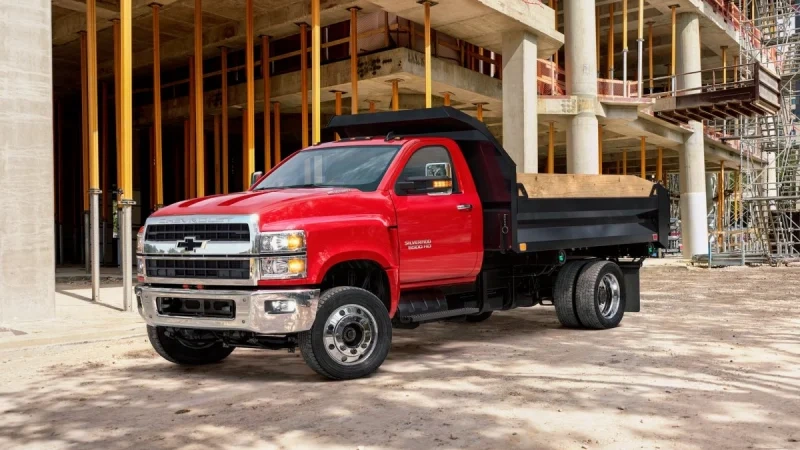
General Motors is officially ending production of the Chevrolet Silverado 4500HD, 5500HD, and 6500HD trucks, marking a major shift in the company’s commercial vehicle strategy and effectively pulling Chevrolet out of the medium-duty truck market after years of struggling to gain meaningful market share.
The decision has surprised many fleet operators and commercial truck buyers, especially because the Silverado HD medium-duty lineup was only reintroduced in 2018 after a long absence from the segment. However, despite high expectations, the trucks never achieved the same level of success enjoyed by rivals such as Ford’s F-Series Super Duty commercial lineup or Ram’s heavy-duty truck offerings.
Industry analysts say the move reflects broader changes happening across the commercial vehicle sector, where manufacturers are increasingly prioritizing electric vehicle development, profitability, fleet efficiency, and specialized commercial partnerships rather than maintaining lower-volume traditional truck segments.
For Chevrolet, the discontinuation represents not just the end of three truck models, but a larger transformation in how General Motors plans to compete in the future commercial transportation market.
Why Chevrolet Is Ending the Silverado Medium-Duty Trucks
The Chevrolet Silverado 4500HD, 5500HD, and 6500HD models were designed primarily for commercial and fleet customers rather than ordinary consumer buyers.
These trucks were commonly used for:
- Construction fleets
- Utility services
- Towing operations
- Delivery businesses
- Municipal work
- Box truck conversions
- Landscaping and equipment hauling
Although the trucks offered strong towing capacity and durable chassis options, sales reportedly remained relatively modest compared to major competitors.
Analysts note that Ford has long dominated the medium-duty commercial segment with the F-650 and F-750, while Ram and Freightliner also maintain strong positions in commercial fleet markets.
Chevrolet struggled to build enough long-term momentum despite relaunching the trucks with significant marketing attention several years ago.
A Partnership That Never Fully Took Off
Part of the Silverado HD medium-duty lineup’s complexity came from its manufacturing structure.
The trucks were developed through a partnership between General Motors and Navistar International, the commercial truck manufacturer now operating under Traton Group ownership.
Production took place at Navistar’s facility in Springfield, Ohio, rather than a traditional GM truck plant.
While the partnership allowed Chevrolet to re-enter the medium-duty segment more quickly, some industry experts believe the trucks never fully developed a distinct identity strong enough to compete aggressively against deeply established commercial rivals.
Fleet buyers often prioritize long-term reliability networks, service infrastructure, and resale confidence, areas where Ford and other long-standing commercial manufacturers already had major advantages.
Medium-Duty Truck Demand Is Changing
The discontinuation also reflects changing realities inside the commercial vehicle industry itself.
Fleet operators are now facing growing pressure related to:
- Fuel efficiency
- Emissions regulations
- Electrification
- Operating costs
- Sustainability goals
- Driver shortages
As a result, manufacturers are increasingly focusing investment on future transportation technologies instead of maintaining smaller-volume traditional segments.
Electric delivery vans, commercial EV platforms, and connected fleet technologies are now attracting massive investment across the automotive industry.
General Motors has already committed billions of dollars toward electric vehicle production and commercial EV expansion through platforms such as BrightDrop and Ultium-based vehicle systems.
Industry analysts believe GM may now see greater long-term growth opportunities in electrified commercial transportation than in conventional medium-duty diesel trucks.
Chevrolet’s Commercial Truck History
Chevrolet actually has a long history in the medium-duty truck market.
For decades, Chevrolet and GMC produced commercial work trucks that served construction, agriculture, and municipal industries across North America.
However, GM exited much of the medium-duty segment in 2009 during the company’s financial restructuring and bankruptcy period.
The Silverado 4500HD, 5500HD, and 6500HD trucks represented Chevrolet’s attempt to return to the market nearly a decade later.
When they launched, the trucks were positioned as modern commercial solutions featuring:
- Duramax diesel engines
- Allison transmissions
- Advanced towing systems
- Fleet-friendly technology
- Upfitter flexibility
At the time, many analysts believed Chevrolet could eventually rebuild a stronger position in the segment.
Instead, the trucks remained relatively niche products compared to dominant competitors.
What Happens to Existing Owners?
Current Silverado medium-duty truck owners are unlikely to lose support immediately.
General Motors is expected to continue offering:
- Parts availability
- Service support
- Warranty coverage
- Fleet maintenance assistance
Commercial fleet customers often operate trucks for many years, so manufacturers typically maintain support systems long after production ends.
However, resale values and long-term parts supply could eventually become concerns if the trucks become increasingly uncommon in the market.
Fleet operators also may face decisions about whether to transition future purchases toward competitors or newer electrified commercial alternatives.
The Growing Shift Toward Commercial EVs
One of the most important industry trends connected to the discontinuation is the rapid expansion of commercial electric vehicles.
Major manufacturers are aggressively investing in:
- Electric delivery trucks
- Fleet EV platforms
- Battery-powered work vans
- Connected logistics systems
- Autonomous fleet technologies
Companies such as Ford, Rivian, Tesla, Mercedes-Benz, and GM are all competing heavily for future commercial transportation contracts.
General Motors especially has focused strongly on BrightDrop, its electric delivery vehicle business targeting logistics and shipping industries.
The company appears increasingly interested in scalable electric commercial fleets rather than smaller-volume traditional diesel work trucks.
Ford Continues Dominating the Segment
Chevrolet’s exit could strengthen Ford’s already dominant position in the medium-duty truck market.
Ford’s F-650 and F-750 trucks remain widely used across:
- Municipal fleets
- Construction companies
- Delivery services
- Utility providers
- Emergency vehicle conversions
Ford benefits from decades of commercial fleet relationships and a massive nationwide service network trusted by business operators.
Without Chevrolet competing directly in the segment, some analysts believe Ford could gain even more market share among medium-duty fleet buyers.
At the same time, other commercial manufacturers such as Freightliner and International may also benefit from reduced competition.
A Symbol of Larger Automotive Change
The Silverado medium-duty discontinuation reflects how dramatically the automotive industry is evolving.
Traditional vehicle categories that once seemed stable are now being reshaped by:
- Electrification
- Automation
- Climate regulations
- Digital fleet management
- Changing transportation economics
Manufacturers are increasingly forced to decide which vehicle segments justify long-term investment.
Lower-volume products often become vulnerable during periods of industry transformation because companies redirect resources toward technologies viewed as more important for future profitability.
For GM, medium-duty diesel trucks may no longer align with the company’s broader long-term strategy.
Commercial Buyers Face Uncertainty
The decision may create uncertainty for some commercial fleet operators who previously relied on Chevrolet medium-duty trucks.
Businesses often prefer consistency across fleets because it simplifies:
- Driver training
- Maintenance systems
- Parts management
- Fleet financing
- Vehicle replacement cycles
Some fleet buyers may now need to transition toward alternative manufacturers sooner than expected.
At the same time, many companies are already evaluating electric commercial fleets as part of long-term sustainability and operating cost strategies.
This could accelerate broader fleet transitions happening across the industry.
The End of an Era for Chevrolet Trucks
The discontinuation of the Silverado 4500HD, 5500HD, and 6500HD marks the end of Chevrolet’s latest attempt to compete in the medium-duty truck sector.
While the trucks earned respect among some fleet operators for durability and towing capability, they ultimately struggled to establish the market presence needed for long-term survival in an increasingly competitive and rapidly changing industry.
For General Motors, the decision signals a stronger focus on future-oriented transportation strategies centered around electrification, commercial EV platforms, and next-generation fleet technologies.
For truck enthusiasts and longtime commercial customers, however, Chevrolet’s departure from the medium-duty market represents the closing of another chapter in American truck manufacturing history.