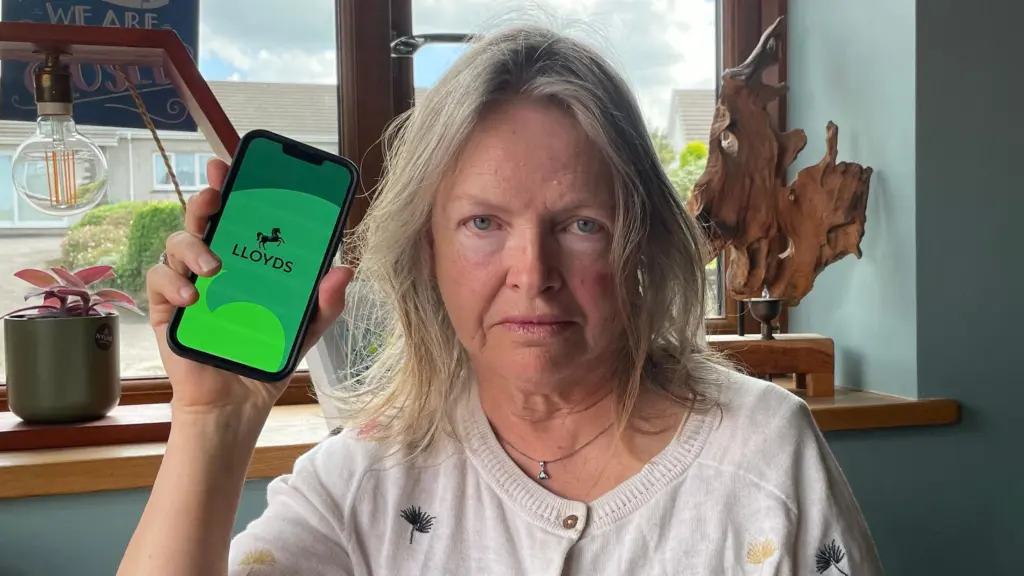
A growing backlash is building against Lloyds Banking Group after a rural customer claimed she was left unable to deposit a £900 HMRC cheque following a controversial rule change affecting cheque deposits at Post Office branches.
The dispute, involving North Cornwall resident Annabel Yates, has quickly become part of a wider national debate about branch closures, digital-only banking policies, and whether major UK banks are leaving rural and elderly customers behind. The case gained national attention after Yates explained that she could neither deposit the cheque through her local Post Office nor successfully scan it using Lloyds’ mobile banking app because of the cheque’s perforated edges.
The issue emerged after Lloyds Banking Group quietly ended cheque deposit services at Post Office counters in January 2026 for customers using Lloyds Bank, Halifax, and Bank of Scotland accounts. While customers can still withdraw and deposit cash at Post Offices, cheque handling services were removed as part of the bank’s wider digital-first strategy.
Critics say the incident highlights how rapid banking digitisation may be creating serious problems for people living in rural communities where physical bank branches have already disappeared.
How the Row Started
According to reports, Annabel Yates received a £900 cheque from HM Revenue & Customs but discovered she could no longer pay it into her Lloyds account through her local Post Office branch.
When she attempted to use Lloyds’ mobile cheque scanning service instead, the system reportedly failed because the HMRC cheque’s perforated edges prevented the app from scanning it properly.
Yates later told media outlets that the situation exposed major weaknesses in the bank’s push toward digital banking.
She argued that Lloyds’ strategy appears based on the assumption that “everything can be done on an app,” but warned that reality is far more complicated for many customers, particularly in rural Britain.
The case quickly spread across British media and social platforms, with many customers sharing frustrations about branch closures and reduced in-person banking access.
Lloyds’ Rule Change Explained
Lloyds Banking Group officially removed cheque deposit services at Post Office counters earlier this year.
The change affects customers across three major brands:
- Lloyds Bank
- Halifax
- Bank of Scotland
The banking group said very few customers were still using Post Office cheque deposit services and argued that most people now prefer digital cheque deposits through the mobile banking app.
A spokesperson for Lloyds said the bank had also introduced a freepost cheque deposit service for customers unable to use the mobile app.
However, critics argue that alternatives like postal deposits may not provide practical solutions for everyone, especially vulnerable customers or people needing faster access to funds.
Rural Customers Feel Targeted
One reason the story has generated such a strong reaction is because it reflects broader concerns about banking access in rural Britain.
Over recent years, hundreds of UK bank branches have closed as customers increasingly shift toward online and app-based banking.
For people living in cities, digital banking often works relatively smoothly. Rural customers, however, sometimes face additional challenges including:
- Poor mobile signal
- Limited broadband access
- Long travel distances
- Reduced public transport
- Fewer nearby bank branches
Critics say removing Post Office cheque deposits removes one of the last remaining local banking options for many communities.
Annabel Yates reportedly warned that the policy risks “disenfranchising the rural population.”
Branch Closures Add to the Anger
The timing of the controversy has intensified frustration because Lloyds Banking Group is simultaneously continuing a major branch closure program across the UK.
Reports indicate the banking group plans to close dozens more branches between 2026 and 2027, including locations operated under Lloyds, Halifax, and Bank of Scotland branding.
Consumer groups say the combination of branch closures and reduced Post Office services is creating a “double blow” for customers who still rely on physical banking support.
According to consumer organization Which?, Lloyds Banking Group has closed around 1,470 sites over the last decade.
Financial experts warn that the impact falls hardest on:
- Elderly customers
- Rural communities
- Small businesses
- Disabled customers
- People without smartphones
For many customers, digital banking is convenient. But critics argue it should not completely replace traditional access methods.
Why HMRC Cheques Created a Problem
One detail that made the story particularly controversial was the type of cheque involved.
HMRC-issued cheques often contain perforated edges or formatting that can interfere with mobile cheque scanning systems. In Annabel Yates’ case, the cheque reportedly could not be processed through Lloyds’ app because the scanner failed to recognise it correctly.
This created what critics describe as a “digital gap” where neither the traditional method nor the new app-based system worked properly.
The incident has raised questions about whether banks fully tested how government-issued documents would interact with digital banking systems before removing physical services.
Banking Hubs May Not Fully Replace Branches
Lloyds and other banks have increasingly pointed toward shared “banking hubs” as future solutions for physical banking access.
These hubs allow customers from multiple banks to access basic services in shared locations.
However, consumer groups say not all hubs provide identical services, and some still lack full cheque handling capabilities.
Campaigners argue that while banking hubs may help partially replace closed branches, they are not yet widespread enough to fully solve rural banking problems.
Local politicians and regional leaders have also started raising concerns about financial exclusion in isolated communities.
The Bigger Debate Around Digital Banking
The Lloyds controversy reflects a much larger debate happening across the UK banking sector.
Banks argue that customer behavior has changed dramatically and that maintaining large branch networks is increasingly expensive.
Digital banking usage has surged over the past decade, while cheque payments now represent only a tiny percentage of overall transactions in Britain.
However, critics say banks are moving too quickly toward digital-only systems without fully protecting vulnerable customers who still depend on traditional services.
The debate increasingly centers on whether convenience for the majority should outweigh accessibility for everyone.
Customers Continue Demanding Flexibility
Financial campaigners argue that modern banking systems should offer both digital convenience and physical support rather than forcing customers entirely into app-based services.
Many customers support digital banking but still want backup options when technology fails or circumstances become complicated.
The Annabel Yates case became symbolic partly because it showed how even a relatively ordinary situation involving a government cheque could suddenly become extremely difficult under new banking rules.
For critics, the story represents more than one rejected cheque. It reflects growing fears that banking is becoming less accessible for people who do not fit neatly into fully digital systems.
Pressure on Lloyds Is Growing
As public criticism grows, pressure may increase on Lloyds Banking Group to review aspects of its cheque deposit policy.
While the bank insists alternatives exist through mobile banking, branches, and postal services, campaigners argue the current system still leaves significant gaps for some customers.
The controversy also arrives during a period when politicians and regulators are paying closer attention to financial inclusion and rural access to essential services.
For now, the row surrounding Annabel Yates and her £900 HMRC cheque has become one of the clearest examples yet of the tension between modern digital banking efficiency and the everyday realities facing many customers across Britain.