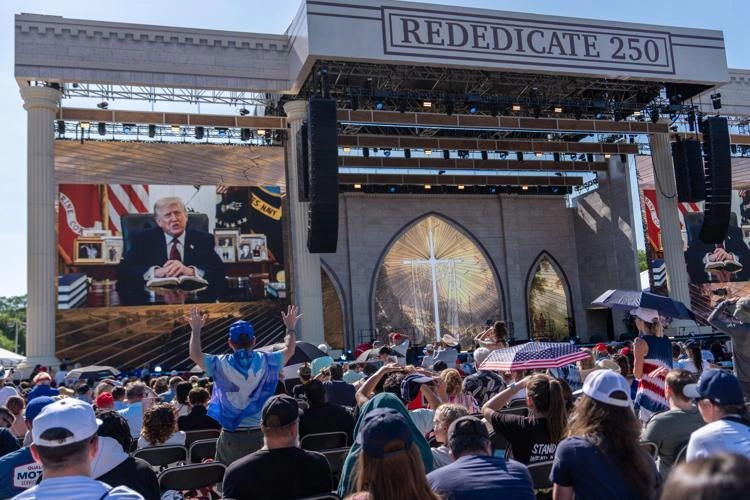
Thousands of Americans gathered in Washington, D.C. this weekend for the massive “Rededicate 250” event, a patriotic and faith-centered rally that blended religion, politics, music, and national identity as the United States moves closer to celebrating its 250th anniversary in 2026.
The event quickly became one of the most talked-about political and cultural gatherings of the year after major conservative leaders, faith organizations, veterans groups, and public figures appeared together to promote themes of national unity, religious freedom, and American renewal.
Held near the National Mall, the rally featured speeches, prayer sessions, worship performances, historical tributes, and repeated calls for Americans to “rededicate” themselves to the country’s founding values before next year’s historic semiquincentennial celebrations.
But as attendance surged into the thousands, the gathering also reignited debate over the growing overlap between religion and politics in modern America.
What Is Rededicate 250?
Rededicate 250 was organized as a large-scale patriotic event connected to the upcoming 250th anniversary of the signing of the Declaration of Independence in 1776.
Organizers described the gathering as a movement focused on spiritual reflection, civic responsibility, historical remembrance, and national unity ahead of America’s milestone anniversary year.
The event brought together a wide coalition of religious organizations, conservative activists, veterans, musicians, and political figures who argued that the country is entering a defining cultural and historical moment.
Speakers repeatedly emphasized themes such as:
- Religious liberty
- National identity
- Family values
- Constitutional principles
- Patriotism
- Civic responsibility
- Historical remembrance
Supporters framed the event as an attempt to reconnect Americans with the country’s foundational ideals during a period of deep political polarization and social division.
JD Vance Speech Draws Major Attention
One of the most closely watched moments came when Vice President JD Vance addressed the crowd and spoke about the historical role of faith in American life.
Vance praised Americans throughout history for turning toward prayer “in times of suffering and in times of triumph,” arguing that religious belief formed a central part of the nation’s foundation.
“It was obvious to the founders that our faith was the ground upon which America stands,” Vance told attendees during his speech. “And if this foundation were to crumble, so too would the very values that make us Americans.”
The speech immediately spread across social media platforms, where supporters praised the message while critics questioned whether political leaders were blurring the line between religion and government.
Still, the remarks energized much of the crowd and became one of the defining moments of the event.
Faith and Politics Intertwined
Throughout the rally, faith remained deeply connected with political messaging.
Prayer circles, worship music, Bible readings, and speeches from religious leaders were combined with discussions about elections, cultural values, education, and national policy.
Several speakers argued that America’s future depends on preserving religious freedom and what they described as the country’s “moral foundation.”
The blending of spiritual and political language reflected a broader trend within American conservative movements, where faith-based messaging increasingly overlaps with discussions about national identity and governance.
Critics of the event argued that such gatherings risk politicizing religion and excluding Americans with different beliefs or political perspectives.
Supporters, however, insisted the event focused on cultural renewal rather than partisan politics.
America’s 250th Anniversary Approaches
The rally arrives as preparations continue nationwide for America’s 250th anniversary in July 2026.
Known as the semiquincentennial, the anniversary is expected to become one of the largest national commemorations in modern US history.
Cities, museums, schools, historical organizations, and government agencies are already preparing celebrations, educational campaigns, and public events tied to the milestone.
The federal government has also supported efforts encouraging Americans to reflect on the country’s history, achievements, challenges, and future direction ahead of the anniversary year.
For many participants at Rededicate 250, the event represented an early symbolic beginning to that national reflection process.
Organizers repeatedly described the anniversary as more than just a celebration of history. Instead, they framed it as a chance for Americans to decide what kind of nation they want the country to become moving forward.
Patriotic Displays Fill Washington
The atmosphere around the event mixed religious energy with large-scale patriotic symbolism.
American flags covered large sections of the gathering area while military tributes, historical imagery, and references to the Founding Fathers appeared throughout the program.
Veterans groups participated alongside youth organizations, churches, and political advocacy groups.
Music performances included patriotic songs, Christian worship music, and historical tributes connected to America’s revolutionary past.
Many attendees arrived wearing red, white, and blue clothing while carrying signs promoting national unity, prayer, and constitutional freedoms.
Some supporters described the atmosphere as part revival meeting, part political rally, and part historical celebration.
Critics Raise Concerns
Despite strong attendance and enthusiastic support from many conservatives, the event also generated criticism online and from political commentators.
Some critics argued the rally reflected growing Christian nationalism within American politics, while others expressed concern about the increasingly blurred boundaries between religious movements and government leadership.
Several commentators questioned whether events framed around patriotism and national identity should be tied so closely to specific religious messaging.
Others worried that the language surrounding “rededication” and “restoring America” could deepen political division rather than encourage unity.
Supporters pushed back strongly against those criticisms, saying the gathering simply celebrated faith, freedom, and shared American values.
The debate itself highlighted how deeply polarized discussions surrounding patriotism, religion, and politics have become in the United States.
Organizers Call for National Renewal
Throughout the event, organizers repeatedly emphasized themes of renewal and responsibility.
Speakers encouraged Americans to become more active in their communities, strengthen family relationships, engage in civic life, and preserve democratic institutions.
Many participants described the gathering as hopeful rather than angry, insisting the goal was to inspire reflection and unity rather than confrontation.
Several younger attendees interviewed during the event said they were drawn by concerns about political division, social instability, and cultural change in the country.
Others said they viewed the 250th anniversary as an opportunity for Americans to reconnect with the principles of liberty, freedom, and democratic participation.
National Spotlight on 2026 Events
As the United States moves closer to its 250th anniversary, events like Rededicate 250 are likely to become increasingly common across the country.
The coming year is expected to feature major historical celebrations, political debates, educational campaigns, and cultural events centered around America’s founding and future identity.
For supporters, Rededicate 250 represented an early call for national reflection and spiritual renewal ahead of that historic milestone.
For critics, it raised difficult questions about the evolving relationship between religion, politics, and patriotism in modern America.
Regardless of political perspective, the gathering demonstrated how strongly emotions surrounding America’s identity and future continue shaping public life as the nation approaches one of the most symbolic anniversaries in its history.