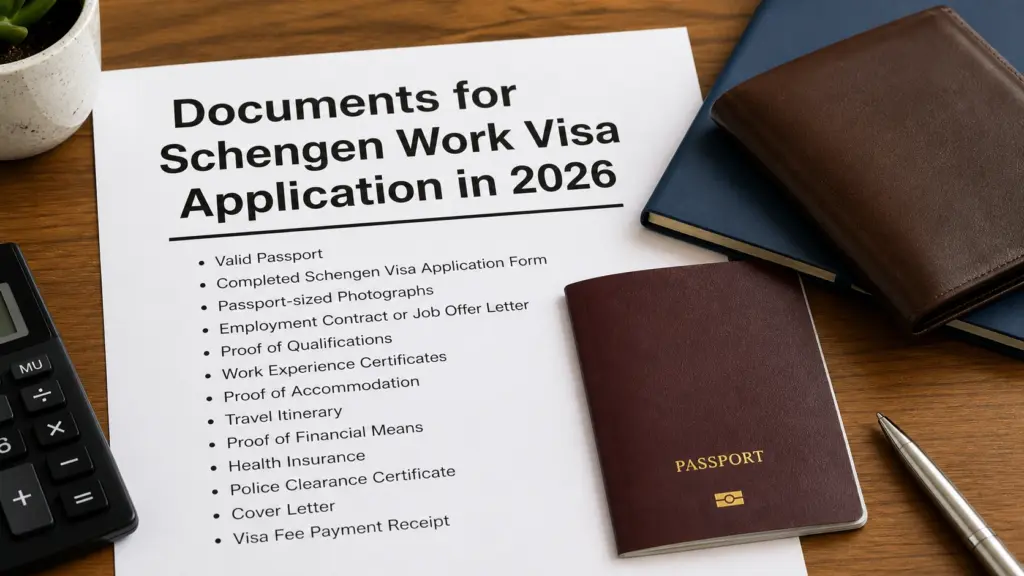
Applying for a Schengen work visa is not just about filling out forms. It is about proving, in a structured way, that you are prepared to live and work in another country. The process can feel detailed, sometimes even overwhelming, especially if it is your first time.
But once you understand what each document represents, the process becomes clearer. It stops feeling like a checklist and starts making sense as a system designed to confirm identity, purpose, and stability.
Understanding the Purpose of Documentation
Every document requested in a Schengen work visa application serves a specific role. Authorities are not just verifying facts. They are building a complete picture of who you are, why you are traveling, and how you will support yourself.
This is why accuracy and consistency matter so much. A small mismatch between documents can raise questions, even if everything else is correct.
Approaching the process with clarity makes it easier to prepare everything properly.
Valid Passport and Identification
The foundation of your application is your passport. It must be valid for at least three months beyond your planned stay and typically issued within the last ten years.
You will also need passport-sized photographs that meet Schengen specifications. These may seem like small details, but they are part of identity verification.
Without proper identification, the rest of the application cannot move forward.
Completed Visa Application Form
The application form is where you formally present your request. It includes personal details, travel plans, and employment information.
It is important to fill this form carefully. Inconsistent or incomplete answers can delay processing or lead to rejection.
Think of this document as the summary of your application. Everything else you submit should support what is written here.
Job Offer or Employment Contract
One of the most critical documents for a work visa is proof of employment. This usually comes in the form of a job offer letter or a signed contract from an employer within the Schengen area.
The document should clearly state your role, salary, duration of employment, and other key details.
This is what confirms the purpose of your stay. Without it, the application lacks its central reason.
Work Permit Approval
In many cases, a work permit must be approved before you apply for the visa. This permit is issued by the authorities in the country where you will be working.
It shows that your employment has been reviewed and accepted at the national level.
The visa then acts as the final step, allowing you to enter and reside in the country for that work.
Proof of Qualifications
Depending on the job, you may need to provide evidence of your education and professional background. This can include degrees, certificates, or relevant training documents.
Some countries may require these documents to be translated or officially recognized.
This step ensures that your qualifications match the requirements of the position you have been offered.
Financial Proof and Stability
Even with a job offer, you may be asked to show proof of financial stability. This can include bank statements or other financial records.
The purpose is to confirm that you can support yourself, especially during the initial period of your stay.
It adds another layer of assurance to your application.
Health Insurance Coverage
Health insurance is a mandatory requirement for Schengen visas. The policy must cover medical expenses across the Schengen area and meet minimum coverage limits.
This ensures that you are protected in case of illness or emergency and that you will not become a financial burden on the healthcare system.
Choosing the right insurance plan is an important part of the process.
Proof of Accommodation
You will need to show where you plan to stay after arriving. This could be a rental agreement, a letter from your employer, or a hotel booking for the initial period.
Authorities want to know that you have a clear plan for housing and will not face immediate difficulties upon arrival.
This document helps complete the practical side of your application.
Additional Supporting Documents
Depending on the country and type of work visa, additional documents may be required. These can include a CV, cover letter, or proof of language proficiency.
Some applicants may also need to provide a police clearance certificate to demonstrate a clean background.
It is important to check the specific requirements of the country you are applying to, as they can vary.
Preparing a Strong Application
The strength of your application depends on how well your documents align. Everything should tell the same story, clearly and consistently.
Organize your documents in a logical order. Double-check details such as dates, names, and addresses.
Small errors can create unnecessary delays, so attention to detail is essential.
What to Expect After Submission
Once your application is submitted, it goes through a review process. This may include additional checks or requests for clarification.
Processing times can vary depending on the country and the volume of applications.
Being prepared for this waiting period helps manage expectations and reduces stress.
A Structured Path to Working in Europe
The Schengen work visa process may seem complex at first, but it follows a clear structure. Each document plays a role in confirming your identity, purpose, and readiness.
Understanding this structure makes the process easier to navigate.
For those planning to work in Europe in 2026, preparation is key. With the right documents in place, the application becomes less about uncertainty and more about taking a defined step toward a new opportunity.