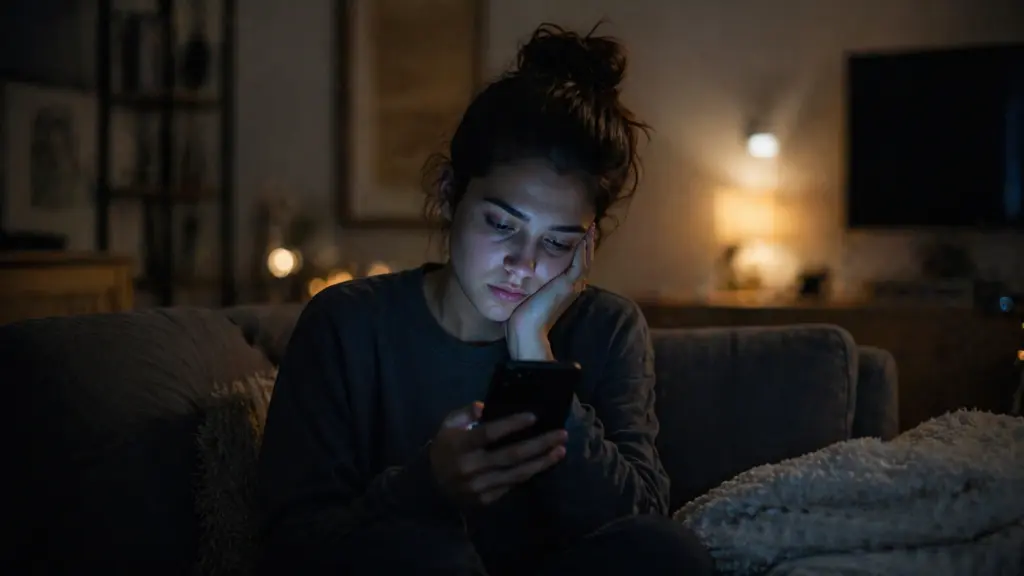
Short videos are designed to fit into small moments. A few seconds here, a quick scroll there. But what begins as a brief distraction often turns into something much longer. Minutes stretch into hours without much awareness.
Psychology suggests this is not accidental. The format is built to keep attention moving. Each video is short, but the stream never ends. That combination makes it easy to stay engaged without ever feeling finished.
The Subtle Link to Lower Life Satisfaction
At first, scrolling can feel relaxing. It fills time, reduces boredom, and offers constant stimulation. But over time, many people notice something else. A lingering sense of dissatisfaction after long periods of use.
Research connects this pattern to lower overall life satisfaction. Not because the content is harmful on its own, but because of what it replaces and how it affects emotional balance.
The experience feels full in the moment, but often empty afterward.
Why It Feels Like Connection Without Being One
Short video platforms often give the impression of being socially connected. You see people talking, sharing, reacting. It feels like participation, even when you are only watching.
But real connection involves interaction. It requires response, attention, and mutual awareness. Watching content does not fully activate those same processes.
This creates a gap. The brain registers social cues, but the deeper sense of connection does not develop.
How Loneliness Builds Quietly
Loneliness does not always come from being alone. It often comes from a lack of meaningful interaction. When short videos take up time that might otherwise be spent connecting with others, that absence becomes noticeable.
Messages are delayed. Conversations are shorter. Opportunities to engage are missed. Over time, this reduces the depth of relationships.
The result is a sense of distance that can be hard to explain.
The Role of Constant Stimulation
Short videos deliver rapid stimulation. New visuals, sounds, and ideas appear every few seconds. This keeps the brain active, but also trains it to expect constant input.
When that level of stimulation becomes the norm, quieter moments can feel uncomfortable. Waiting, thinking, or simply being still may start to feel harder.
This shift can increase restlessness and contribute to low-level anxiety.
Why Anxiety Feels Stronger After Scrolling
Anxiety often grows in environments where attention is scattered. Short videos encourage quick shifts from one topic to another. There is little time to process what you have seen before moving on.
This can leave the mind feeling unsettled. Instead of clarity, there is a mix of impressions without resolution.
Over time, this pattern can make it harder to feel calm, even outside of the app.
The Dopamine Loop That Keeps You Engaged
There is also a biological factor behind this behavior. Each new video has the potential to provide a small reward. A moment of humor, surprise, or interest.
Because these rewards are unpredictable, the brain keeps looking for the next one. This creates a loop where scrolling continues in search of something slightly better.
It is not about lack of discipline. It is about how the system interacts with natural reward processes.
What Gets Lost in the Process
Time spent on short videos often replaces other activities. Conversations, hobbies, rest, and even sleep can be affected. These changes happen gradually, without a clear decision.
But they influence how a person feels over time. Less meaningful interaction, less focused activity, and less rest all contribute to lower satisfaction.
What is lost is not just time, but the quality of experience.
Creating Awareness Without Judgment
Understanding this pattern is not about blame. It is about awareness. Recognizing how short videos affect attention and emotion can create space for different choices.
This does not mean eliminating them completely. It means noticing when the experience shifts from enjoyable to draining.
That awareness is the first step toward balance.
Small Changes That Make a Difference
Breaking the cycle does not require a major shift. Small adjustments can help. Setting limits on when you scroll, or creating phone-free moments during the day.
Replacing some of that time with activities that involve real engagement can also make a difference. Even brief conversations or focused tasks can restore a sense of connection.
These changes help rebalance stimulation and satisfaction.
Finding a Healthier Rhythm
Short videos are not inherently negative. They can entertain, inform, and provide a quick break. The issue arises when they dominate attention.
A healthier rhythm allows for both quick content and deeper experiences. It ensures that convenience does not replace connection.