Few moments in film history are as unforgettable as Fay Wray standing in the hands of King Kong on top of the Empire State Building. It’s more than just a movie scene it’s a cultural symbol that defined an era of cinema.
When audiences talk about classic Hollywood monsters, the name King Kong immediately comes up. And right beside it stands Fay Wray, the actress who became forever linked to the giant ape that changed her career and film history itself.
Quick Facts About Fay Wray and King Kong
| Category | Details |
|---|---|
| Film Title | King Kong |
| Release Year | 1933 |
| Lead Actress | Fay Wray |
| Director | Merian C. Cooper, Ernest B. Schoedsack |
| Genre | Adventure, Monster, Fantasy |
| Studio | RKO Radio Pictures |
| Runtime | 100+ minutes |
| Iconic Character | King Kong |
| Setting | Skull Island, New York City |
| Cultural Status | Classic Hollywood masterpiece |
The Story Behind King Kong
At its core, King Kong tells the story of an ambitious filmmaker who leads an expedition to a mysterious island. There, the crew discovers a strange and dangerous world filled with prehistoric creatures and a giant ape unlike anything humanity has ever seen.
Fay Wray’s character, Ann Darrow, becomes central to the story when she is captured by the island’s inhabitants and offered as a sacrifice to King Kong.
What follows is a mix of adventure, fear, unexpected connection, and tragedy as Kong develops a powerful bond with Ann.
Without giving away spoilers, the film moves from jungle survival to a dramatic shift in New York City, where the story reaches its unforgettable climax.
This blend of adventure, romance, and monster spectacle was groundbreaking for its time—and still feels powerful today.
Why Fay Wray Was Perfect for King Kong
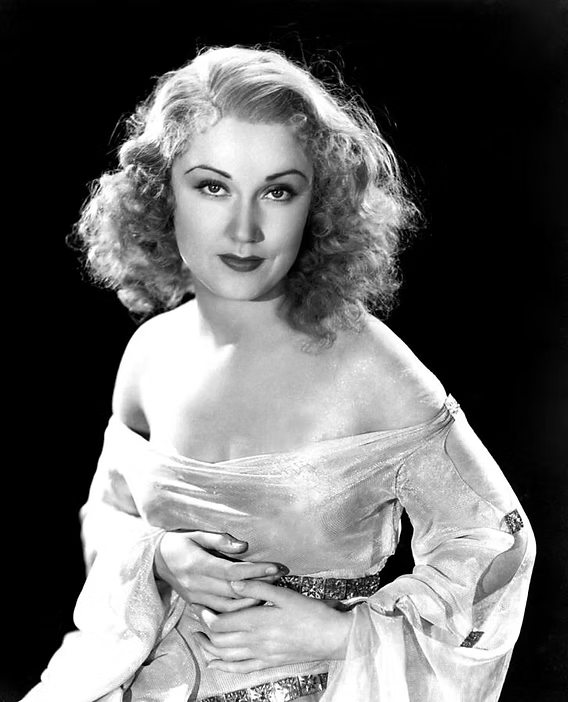
Fay Wray was already a rising actress in Hollywood, but King Kong changed everything.
Her role as Ann Darrow required:
- Emotional vulnerability
- Physical performance under extreme conditions
- Expressive fear and compassion
- Strong screen presence
She had to act opposite nothing visible in many scenes—since King Kong was created using stop-motion animation.
This made her performance even more impressive. She was reacting to imagination, direction, and timing, yet delivered one of the most iconic performances in film history.
Many film historians credit her acting as one of the reasons King Kong feels so emotionally real despite its fantasy elements.
Cast and Characters Overview
| Actor | Character | Role Type |
|---|---|---|
| Fay Wray | Ann Darrow | Lead Female Character |
| Robert Armstrong | Carl Denham | Filmmaker/Explorer |
| Bruce Cabot | Jack Driscoll | Hero/First Mate |
| Frank Reicher | Captain Englehorn | Ship Captain |
| King Kong | Kong | Giant Ape / Central Figure |
Even though King Kong is not human, he is treated as a central character with emotional depth and narrative importance.
King Kong (1933) Plot Overview Without Spoilers
The story begins in New York, where filmmaker Carl Denham is searching for a leading actress for his next big project. He meets Ann Darrow, played by Fay Wray, and convinces her to join a mysterious voyage.
The crew travels to an uncharted island, unaware of the dangers waiting for them. Once they arrive, they discover a primitive world filled with danger, rituals, and a powerful creature worshipped by the locals.
Ann becomes the center of attention when she is taken by the island tribe and presented to King Kong.
What follows is a mix of survival, escape, emotional connection, and large-scale destruction as the story shifts from the jungle to the modern city.
The film builds tension slowly, combining human drama with groundbreaking visual effects that were revolutionary for 1933.
Fay Wray’s Performance and Impact
Fay Wray’s performance is often described as one of the earliest examples of a “scream queen,” though her role is much deeper than that label suggests.
She brings:
- Emotional realism
- Strong survival instincts
- Sympathy for Kong
- Fear balanced with curiosity
- Human vulnerability
Her chemistry with the unseen King Kong is what makes the story believable.
Even today, audiences are surprised at how emotionally engaging her performance feels despite the film’s age.
The Creation of King Kong (The Monster)
King Kong was brought to life using stop-motion animation by Willis O’Brien, a pioneering visual effects artist.
At the time, this technique was revolutionary. Each movement of Kong was carefully crafted frame by frame.
| Technique | Description |
|---|---|
| Stop-Motion Animation | Frame-by-frame puppet movement |
| Miniature Sets | Small-scale city and jungle environments |
| Rear Projection | Combining live action with animation |
| Optical Effects | Layering images for realism |
Interesting Facts You May Not Know
| Fact | Detail |
|---|---|
| Fay Wray didn’t see Kong clearly during filming | She acted without full visual effects |
| King Kong was groundbreaking in animation | One of the first major stop-motion films |
| Empire State Building climax | Became one of cinema’s most iconic scenes |
| Originally considered a risky film | Studio was unsure of success |
| Became a cultural symbol | Represented beauty and the beast themes |
Modern Ratings and Critical Reception
Even decades later, King Kong continues to receive praise.
| Category | Rating |
|---|---|
| Storytelling | 9/10 |
| Visual Effects (for its time) | 10/10 |
| Acting | 9/10 |
| Cultural Impact | 10/10 |
| Rewatch Value | 8.5/10 |
FAQs
Who was Fay Wray in King Kong?
Fay Wray played Ann Darrow, the female lead who becomes central to King Kong’s emotional storyline.
Why is King Kong so famous?
It was groundbreaking for its visual effects, storytelling, and emotional depth, making it a classic in film history.
Was King Kong real or animated?
King Kong was created using stop-motion animation and miniatures.
Why did King Kong capture Fay Wray’s character?
In the story, Ann Darrow is offered as a sacrifice and later becomes central to Kong’s emotional arc.
Is King Kong (1933) worth watching today?
Yes, it remains a must-watch for film lovers and anyone interested in cinematic history.
What makes Fay Wray’s performance special?
She delivered emotional realism while acting against non-existent effects, making her performance timeless.